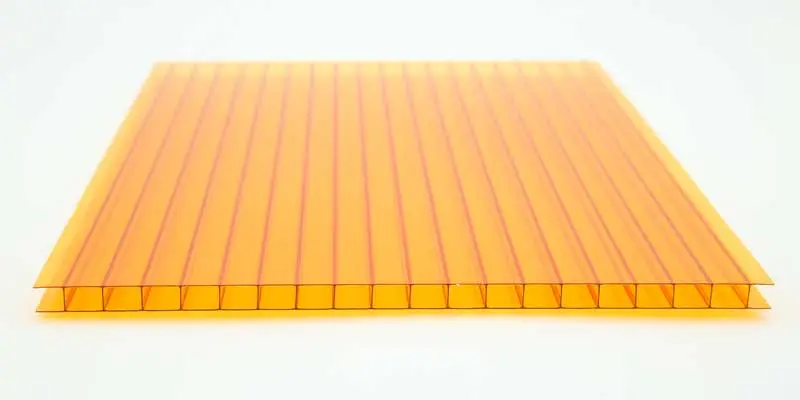
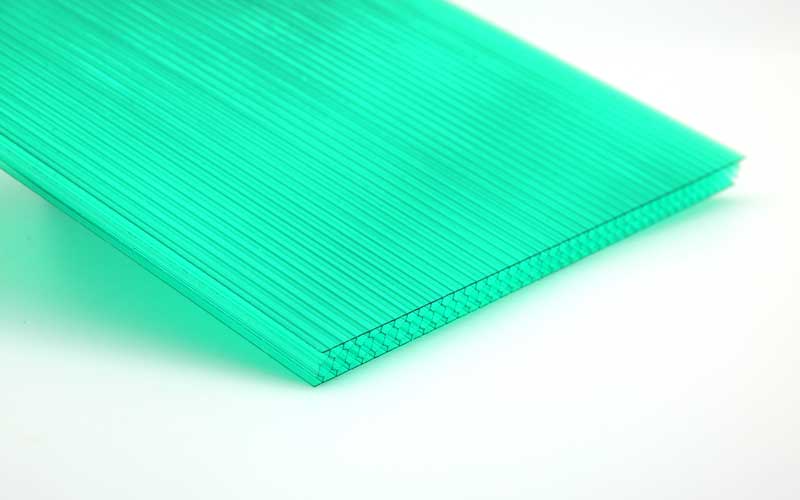
Polycarbonate clear sheet is now the first choice for many industrial buyers, greenhouse manufacturers, and safety equipment producers.
Why?
Because it combines glass-like clarity with extreme strength. And it weighs much less.
This article will help you understand:
- What is a polycarbonate clear sheet really
- Where it performs best
- How to avoid common buying mistakes
By the end, you will know exactly why this material can upgrade your products.
What Exactly Is Polycarbonate Clear Sheet?
Polycarbonate is a thermoplastic polymer. It is amorphous, which means it lets light pass through clearly.
A polycarbonate clear sheet is simply a flat panel made from this resin. It typically comes with protective film on both sides to prevent scratches during shipping and fabrication.
Key properties you should know:
- Light transmission: up to 89% – almost as clear as glass
- Impact strength: 200 times stronger than glass of the same thickness
- Temperature range: -40°C to +115°C
- Weight: half the weight of glass
Unlike glass, polycarbonate does not shatter into sharp pieces. This makes it much safer for people and equipment.
Top 5 Applications for Polycarbonate Clear Sheet
Buyers come to us for many uses. Here are the most common ones where a polycarbonate clear sheet adds real value.
1. Greenhouse Glazing and Agricultural Covers

Farmers and nursery owners choose polycarbonate because it diffuses sunlight well and insulates better than glass. A 4mm twin-wall clear sheet can reduce heating costs by up to 30% compared to single glass.
2. Machine Guards and Safety Shields
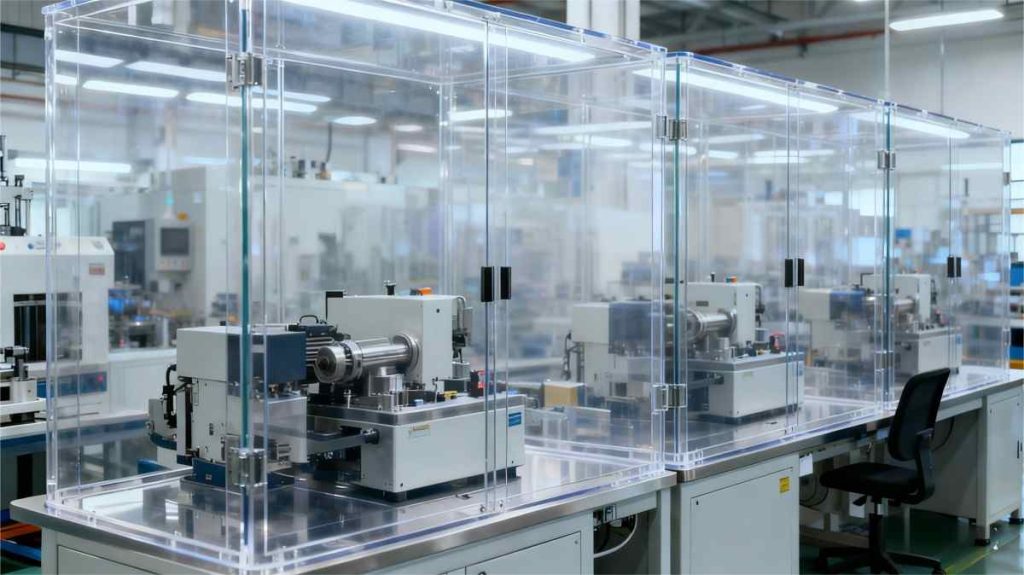
In factories, clear barriers protect workers from moving parts, flying debris, and chemical splashes. Polycarbonate clear sheet meets OSHA and CE safety standards. It will not crack under sudden force.
3. Retail Display Cases and Anti-Vandal Windows
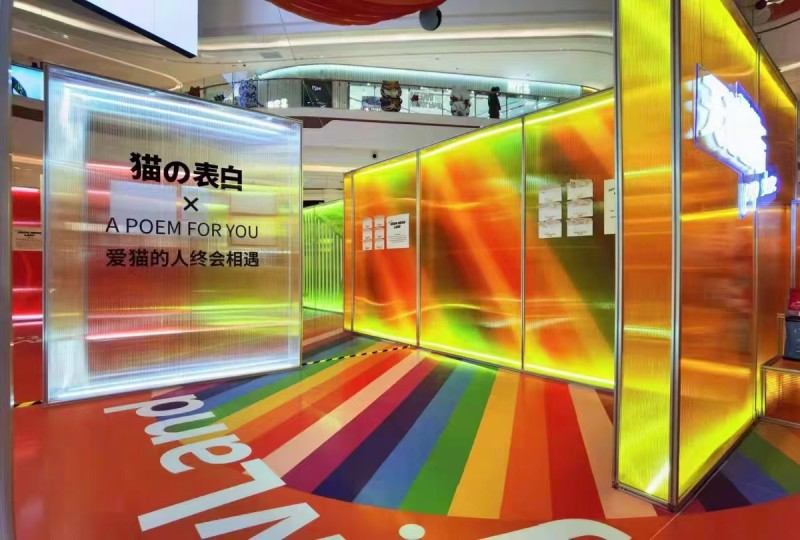
Stores in high-crime areas use clear polycarbonate for front windows and display boxes. Vandals cannot break through easily. The material also resists graffiti removal chemicals.
4. Police and Military Vehicle Armor
When laminated or thickened (12mm+), polycarbonate clear sheet stops bullets and blast fragments. Many armored vehicles use it for side windows.
5. DIY Home Projects and Shed Windows
Homeowners like it because they can drill and saw it with basic tools. It will not crack like acrylic during cutting.
Polycarbonate vs Acrylic vs Glass: Which One Should You Choose?
This is the most common question we get. Here is a simple comparison.
| Property | Polycarbonate Clear Sheet | Acrylic (Plexiglass) | Glass |
|---|---|---|---|
| Impact resistance | Excellent (200x glass) | Good (10x glass) | Poor |
| Clarity | Very good (89%) | Excellent (92%) | Excellent (91%) |
| Weight | Light (half of glass) | Light | Heavy |
| Scratch resistance | Low (needs coating) | Medium | High |
| UV resistance | Poor without additive | Good | Excellent |
| Cost | Medium | Low | Medium |
Our recommendation for buyers:
- Choose polycarbonate when safety and impact strength matter most (greenhouses, guards, windows in risky areas).
- Choose acrylic for indoor displays where scratching is a concern and budget is tight.
- Choose glass only for high-end optics or where absolute scratch resistance is needed.
How to Cut and Drill a Polycarbonate Clear Sheet Without Cracking
Many first-time buyers ruin sheets by using the wrong tools. Follow these tips.
Cutting:
Use a fine-tooth circular saw blade (10–14 teeth per inch). Run the saw at medium speed. Do not force the sheet. For straight cuts, a scoring knife works for thin sheets (under 2mm).
Drilling:
Use standard high-speed steel bits. But slow down – 500 to 1000 RPM only. Back the sheet with a wood block to prevent breakout. Clean chips often.
Bending:
Polycarbonate can be cold-bent to a radius of 100 times its thickness. For tighter curves, use a strip heater at 150°C.
⚠️ Important: Always remove protective film after fabrication, not before. The film prevents scratches during handling.
UV Protection: Why Standard Polycarbonate Turns Yellow
Standard polycarbonate clear sheet is not naturally UV-resistant. Without protection, sunlight will cause yellowing and brittleness within 12–24 months.
For outdoor use, you need UV-coated polycarbonate. One side (or both) has a co-extruded UV-resistant layer. This lasts 5–10 years without yellowing.
When ordering, always specify:
- “UV2” – one-side UV-coated (for most applications)
- “UV4” – both sides UV coated (for mirrors or reversible panels)
If you skip this, your greenhouse windows will fail in one season.
How to Choose the Right Thickness for Your Project
Polycarbonate clear sheet comes from 0.5 mm to 50 mm. Here is a thickness guide:
| Thickness | Best for |
|---|---|
| 0.5–1.5mm | Glazing, craft, model making |
| 2–3mm | Machine guards, retail displays |
| 4–5mm | Greenhouse single-wall, storm windows |
| 6–10mm | Anti-vandal windows, bus shelters |
| 12mm+ | Bullet-resistant barriers |
Remember: thicker means heavier and more expensive. Do not overspecify. A 3mm sheet is already stronger than most people need for indoor safety guards.
Common Mistakes to Avoid When Buying Polycarbonate Clear Sheet
We have seen buyers waste money on the wrong materials. Avoid these errors.
Mistake 1: Buying a standard sheet for outdoor use
Result: Yellow after 8 months. Always ask for UV-coated grades.
Mistake 2: Removing protective film before installation
Result: Scratches from dust and tools. Keep the film on until the last step.
Mistake 3: Using acetone or alcohol to clean
Result: Crazing (tiny cracks). Use only mild soap and water.
Mistake 4: Tightening screws directly onto the sheet
Result: Stress cracks around holes. Use rubber washers and oversize holes to allow thermal expansion.
How to Clean and Maintain a Polycarbonate Clear Sheet
Dirt and chemicals are the biggest enemies. Follow this simple routine.
- Rinse with water to remove loose dust.
- Wash with mild dish soap and a soft sponge.
- Rinse again thoroughly.
- Dry with a microfiber cloth – no paper towels.
Never use ammonia, bleach, acetone, or abrasive pads.
For outdoor sheets, inspect once a year. Replace if you see yellowing or surface cracks.
Polycarbonate Clear Sheet Certifications You Should Look For
Serious buyers should always check for these third-party marks:
- UL 972 – Burglary resistance
- ASTM D256 – Impact strength test
- ISO 4892 – UV weathering performance
- UL 94 V-0 or V-2 – Flammability rating (V-2 is standard, V-0 is self-extinguishing)
If your supplier cannot provide test reports, find another supplier.
Cost Factors: Why Prices Vary Between Suppliers
Polycarbonate clear sheet is not a commodity. Price depends on:
- Raw resin quality (virgin vs regrind content)
- UV coating (adds 15–25% to cost)
- Thickness tolerance (±0.1mm is better than ±0.3mm)
- Surface finish (matte, textured, or polished edges)
- Quantity (full pallet orders get a 30–40% discount)
A cheap sheet often means regrind material. It will be weaker and turn yellow faster. Pay a little more for virgin resin.
Final Recommendation for Buyers
If you need a transparent sheet that will not shatter under impact, a polycarbonate clear sheet is your best option.
For outdoor use, always buy UV-coated grades. For indoor safety, standard polycarbonate works fine.
Start with a sample order first. Test cutting, drilling, and cleaning. Then scale up.
We supply polycarbonate clear sheet with:
- Virgin resin (no regrind)
- UV2 or UV4 coating options
- Thickness from 0.5 mm to 20 mm
- Protective film on both sides
- UL and ISO certificates
Request a quote with your size and thickness. We ship globally.
FAQ – Quick Answers
Q: Can a polycarbonate clear sheet be laser cut?
A: Yes, but it releases chlorine gas. We recommend mechanical cutting instead.
Q: Does it block UV light?
A: Only if you buy a UV-coated sheet. Standard type does not.
Q: How long does it last outdoors?
A: With UV coating, 5–10 years. Without coating, less than 2 years.
Q: Is it food-safe?
A: Yes, FDA-compliant grades are available. Ask specifically.
Q: Can it replace glass in windows?
A: Yes, for most applications except high-end optical clarity needs.