
Plastic Injection Molding
Plastic Injection Molding: The Cornerstone of Modern Plastic Manufacturing
Plastic Injection Molding is an efficient mass-manufacturing technology that melts plastic raw materials by heating, injects them into mold cavities at high pressure, and obtains products of specific shapes after cooling and solidification. This process not only produces various products ranging from micro gears to automotive bumpers but also supports the large-scale development of industries such as automotive, electronics, and medical care. More than 80% of plastic products worldwide are processed through this technology.
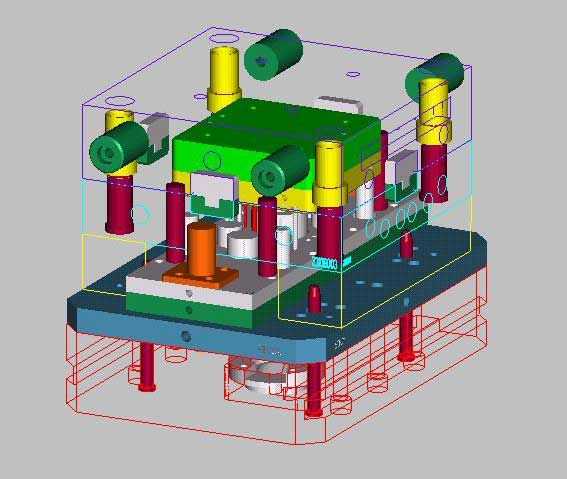
1. Core Principles and Process Flow
The essence of injection molding is a cyclic process of “material plasticization – high-pressure injection – cooling and setting”, which can be specifically divided into five key steps:
- Raw Material Preparation:Select thermoplastic plastics (such as ABS, PP, PC) or some thermosetting plastics (such as epoxy resin) according to product requirements. Hygroscopic materials (such as nylon) need pre-drying treatment.
- Plasticization Stage:Plastic pellets enter the injection molding machine barrel from the hopper, and are melted into a uniform flowing melt through heating (barrel temperature of thermoplastics is usually above 150℃) and screw rotation stirring.
- Injection Filling:Driven by the screw thrust, the melt is injected into the closed cavity through the nozzle and mold runner at high speed and pressure (injection pressure 35-200MPa). Meanwhile, air in the cavity is discharged to avoid bubble defects.
- Pressure Holding and Cooling:Pressure is maintained to prevent melt backflow. The mold is cooled by circulating cooling water (mold temperature of thermoplastics is usually below 100℃) to solidify the melt into shape.
- Demolding and Part Removal:The mold opens, and the ejection mechanism pushes out the finished product, completing a molding cycle (usually a few seconds to several minutes).

Raw Material Preparation → Plasticization → Injection → Pressure Holding & Cooling → Demolding”
2. Core Equipment and Key Components
The injection molding system mainly consists of an injection molding machine, mold, and control system, which work together to ensure product precision and production efficiency:
- Injection Molding Machine:The core processing equipment, composed of three parts: injection system, clamping system, and power system. The injection system is responsible for plasticization and injection, and the reciprocating screw injection molding machine is most widely used due to uniform plasticization and low pressure loss. The clamping system provides clamping force (from dozens to thousands of tons) through oil cylinders to ensure the mold is closed without material overflow. It can be divided into horizontal (suitable for mass production) and vertical (suitable for insert molding) types.
- Injection Mold:The key to determining product shape, composed of fixed mold (fixed side) and moving mold (movable side), including three core components: ① Gating system (runners and gates guiding melt flow); ② Molding parts (core and cavity determining product shape); ③ Auxiliary systems (cooling circuits, venting grooves, ejection mechanisms). Multi-cavity molds can form multiple products at one time, while hot runner molds reduce waste and are suitable for mass production.
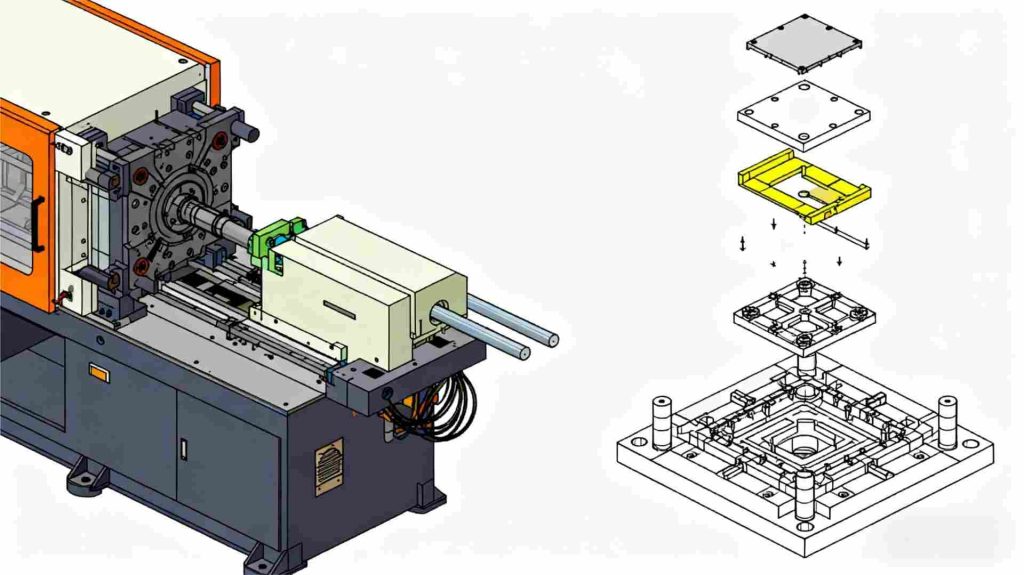
The left side shows the overall structure of the injection molding machine, marking components such as “hopper, barrel, screw, nozzle, clamping cylinder”; the right side disassembles the internal structure of the mold, highlighting “cavity, runner, cooling system, ejection mechanism”, and distinguishing fixed and moving molds with different colors.
3. Technical Advantages and Industrial Applications
Injection molding has become an indispensable manufacturing technology in multiple fields due to its unique advantages:
- High-Efficiency Mass Production:A single mold can be reused tens of thousands to millions of times. A 32-cavity bottle cap mold can produce up to 15,000 pieces per hour, supporting high-frequency demands such as beverages and medical consumables.
- Design Flexibility:It can integrally form complex structures with undercuts, deep cavities, and thin walls (minimum 0.1mm). For example, a laptop touchpad with more than ten features such as positioning posts and heat dissipation holes can be formed in one step, reducing 80% of assembly processes.
- Precision and Consistency:Dimensional tolerance can be controlled within ±0.05mm, and surface roughness Ra ≤ 1.6μm, meeting the requirements of precision parts such as electronic connectors and medical adapters.
Its applications have penetrated into various life and industrial scenarios:
- Automotive Industry:A car contains 2,000-3,000 injection-molded parts. For example, engine components made of PA66 + glass fiber achieve vehicle lightweight and energy consumption reduction;
- Medical Field:Using FDA-certified medical-grade plastics, sterile consumables such as syringes and infusion sets are produced in clean workshops, with mold mirror polishing to avoid bacterial residue;
- Electronics Industry:Processing 5G base station connectors (tolerance ±0.01mm) and mobile phone charger housings to ensure precise equipment adaptation.
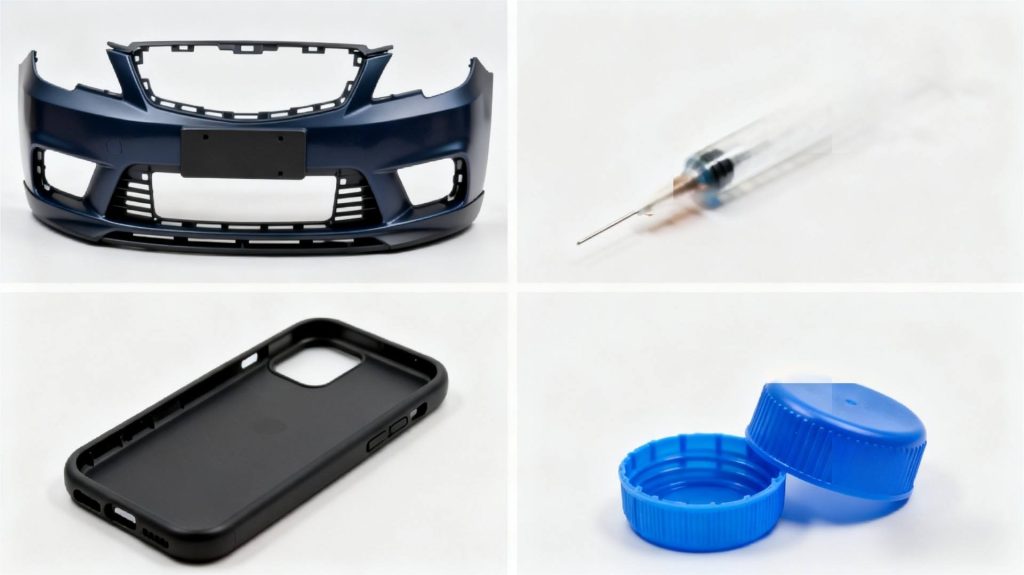
A 2×2 collage is recommended, showing four representative products: “automotive bumper”, “medical syringe”, “mobile phone shell”, and “beverage bottle cap”, with labels of the used plastic materials (e.g., PC/ABS, medical-grade PP) and core process requirements.
4. Development Trends and Innovation Directions
With the upgrading of manufacturing industry, injection molding is evolving towards high efficiency, environmental protection, and intelligence:
- Green Manufacturing:Servo motor injection molding machines reduce energy consumption by more than 40%. Molding technologies for bio-based plastics (such as PLA) and recycled plastics are increasingly mature, with runner waste recovery rate exceeding 90%;
- Process Innovation:Technologies such as reaction injection molding (suitable for polyurethane) and co-injection molding (multi-material/multi-color products) expand application boundaries;
- Intelligent Upgrading:Real-time adjustment of process parameters is realized through PLC control systems. 3D-printed conformal cooling molds reduce cooling time by more than 30%.
Your Trusted Partner for Polycarbonate Products in China
Click on the button, you will find the Trustworthy Supplier Of Polycarbonate Sheet/Acrylic Sheet/Film or Machining services.

