
Molding Polycarbonate
Introduction to Polycarbonate Sheet Molding
Polycarbonate (PC) sheets have become indispensable in construction, transportation, and electronics due to their exceptional impact resistance (250 times that of glass), high light transmittance, and weather durability. The molding process acts as the backbone of PC sheet manufacturing, transforming granular PC resin into finished products with precise dimensions, structural integrity, and functional properties. This article explores the core molding technologies, critical parameters, and quality optimization strategies for PC sheets.
1. PC Sheet Applications

Fig.1 Typical applications of molded PC sheets: (from left) greenhouse roofing, railway sound barriers, and industrial machine guards
2. Core Molding Technologies for PC Sheets
Extrusion Molding – Workhorse for Mass Production
Extrusion molding dominates the production of solid, hollow, and corrugated PC sheets. Advanced lines integrate precision components to ensure consistent quality.
Process Flow
The process follows four key steps:
1. Raw material mixing (PC resin + additives);
2. Melting and plasticization in the extruder;
3. Sheet formation through the T-die;
4. Calibration and cooling via the 3-roll calendar.

Key Equipment & Parameters
- Extruder: Equipped with special mixing screws for uniform plasticization, reducing crystal points.
- T-die: Adopts double-section design for precise thickness adjustment (±0.05mm).
- 3-Roll Calendar: Temperature control accuracy of ±1℃ to ensure flatness and surface gloss.
- Thickness Scanner: Real-time monitoring and feedback for dimensional stability.
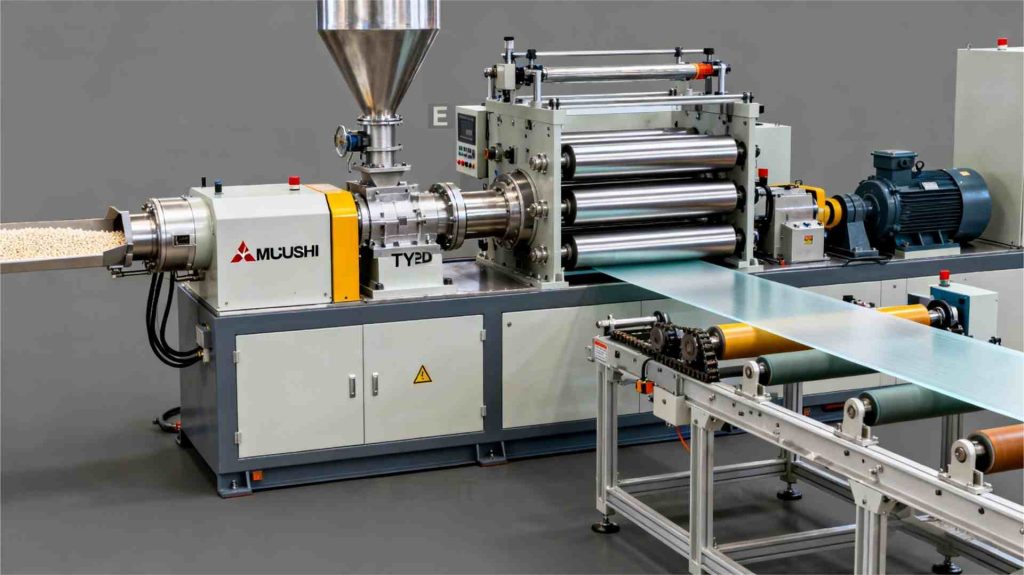
Fig.2 PC sheet extrusion line with Mitsubishi-Hitachi extruder and EDI T-die
Injection Molding – For Complex-Shaped Sheets
Injection molding is preferred for PC sheets with integrated structures (e.g., interlocking edges, reinforcing ribs). It requires strict process control to avoid defects.
Critical Process Controls
- Material Drying: Moisture content must be ≤0.02% to prevent silver streaks; dry at 120℃ for 4-6 hours.
- Injection Parameters: Pressure (80-120MPa), speed (50-100mm/s), and mold temperature (80-120℃) to avoid gas marks.
- Holding Time: 5-10s to eliminate shrinkage in thick-walled sections.
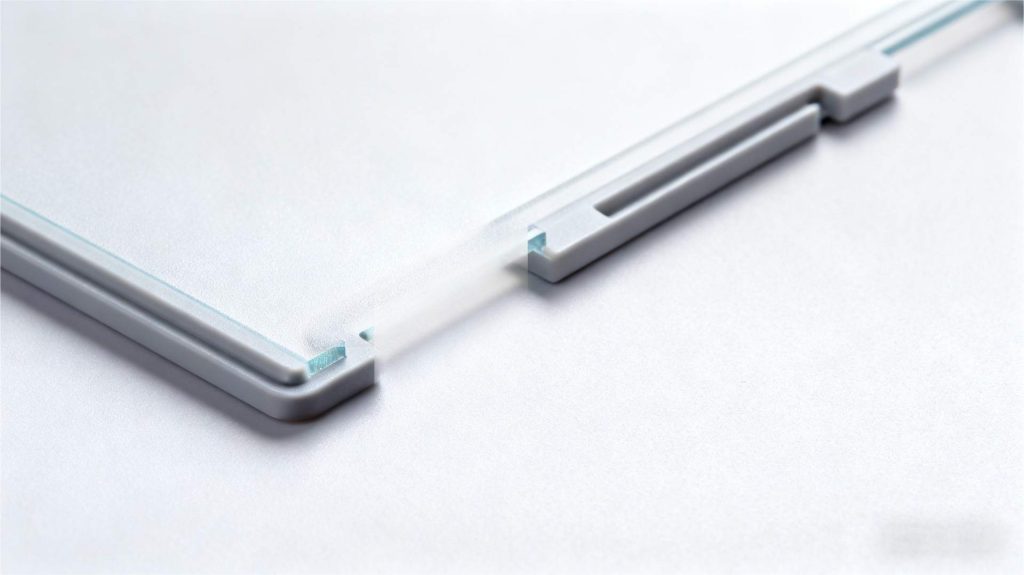
Fig.3 Injection-molded PC sheet with integrated locking edges for quick assembly
Co-Extrusion Molding – Functional Surface Enhancement
Co-extrusion combines two or more PC melts (with different additives) into a single sheet, enabling multi-functional surfaces without secondary processing.
Typical Co-Extrusion Configurations
| Layer Structure | Function | Application Scenario |
|---|---|---|
| PC + UV-Stabilized PC | Weather resistance | Outdoor roofing |
| PC + PVDF-Coated PC | Chemical corrosion resistance | Chemical plant enclosures |
| PC + Anti-Fog PC | Condensation prevention | Greenhouse glazing |
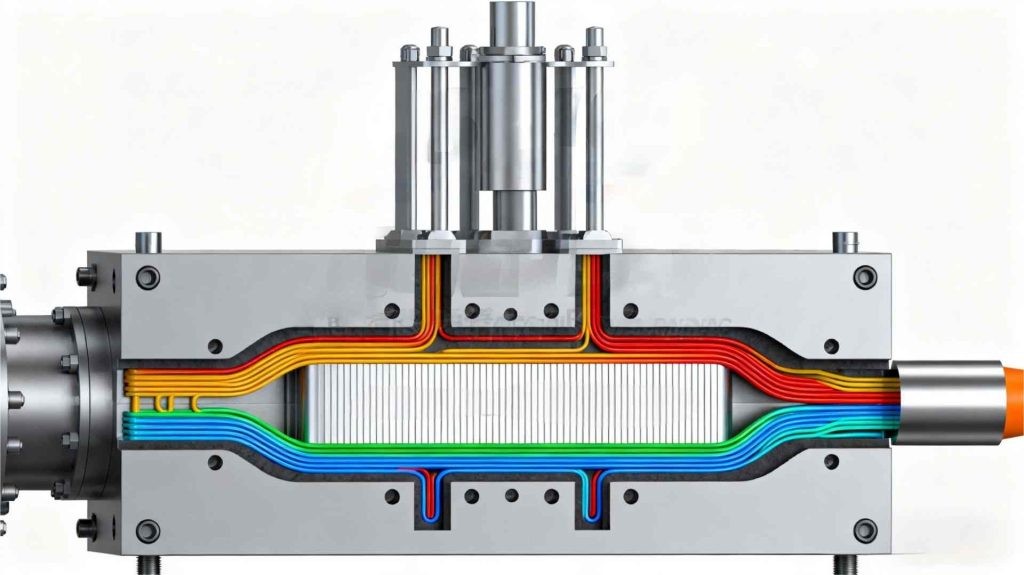
Fig.4 Co-extrusion die for producing UV-protected PC sheets (EDI feed-block design)
3.Quality Control: Defects & Solutions
Transparent PC sheets are prone to defects affecting performance and aesthetics. Below are common issues and troubleshooting methods:
| Defect | Root Cause | Solution |
|---|---|---|
| Silver Streaks | Moisture absorption, air entrapment | Extend drying time; avoid reverse screw rotation after melting |
| Bubbles/Voids | Poor drying, low injection pressure | Dry at 120℃ for 6h; increase pressure to 100-120MPa |
| Surface Haze | Mold temperature too low | Raise mold temperature to 90-110℃ |
| Thickness Variation | Uneven die gap | Use double-section T-die for fine adjustment |
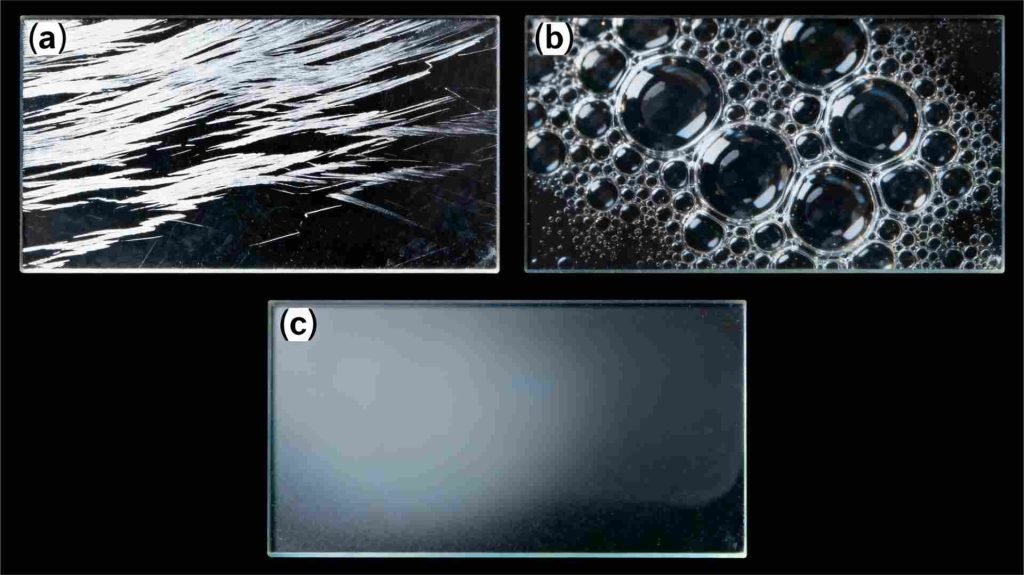
Fig.5 Common PC sheet defects: (a) silver streaks, (b) bubbles, (c) surface haze
4. Advanced Molding Trends
- Cleanroom Molding: ISO Class 7 cleanrooms for optical-grade PC sheets (0.4-1.5mm thickness) to avoid dust contamination.
- Energy-Efficient Extrusion: Siemens motor-driven lines reduce energy consumption by 15-20% compared to traditional equipment.
- Smart Monitoring: Dynisco computer control systems for real-time adjustment of temperature and pressure.
5. Conclusion
Your Trusted Partner for Polycarbonate Products in China
Click on the button, you will find the Trustworthy Supplier Of Polycarbonate Sheet/Acrylic Sheet/Film or Machining services.

