
Interlocking PC Sheet
Advantages of Interlocking PC Sheet
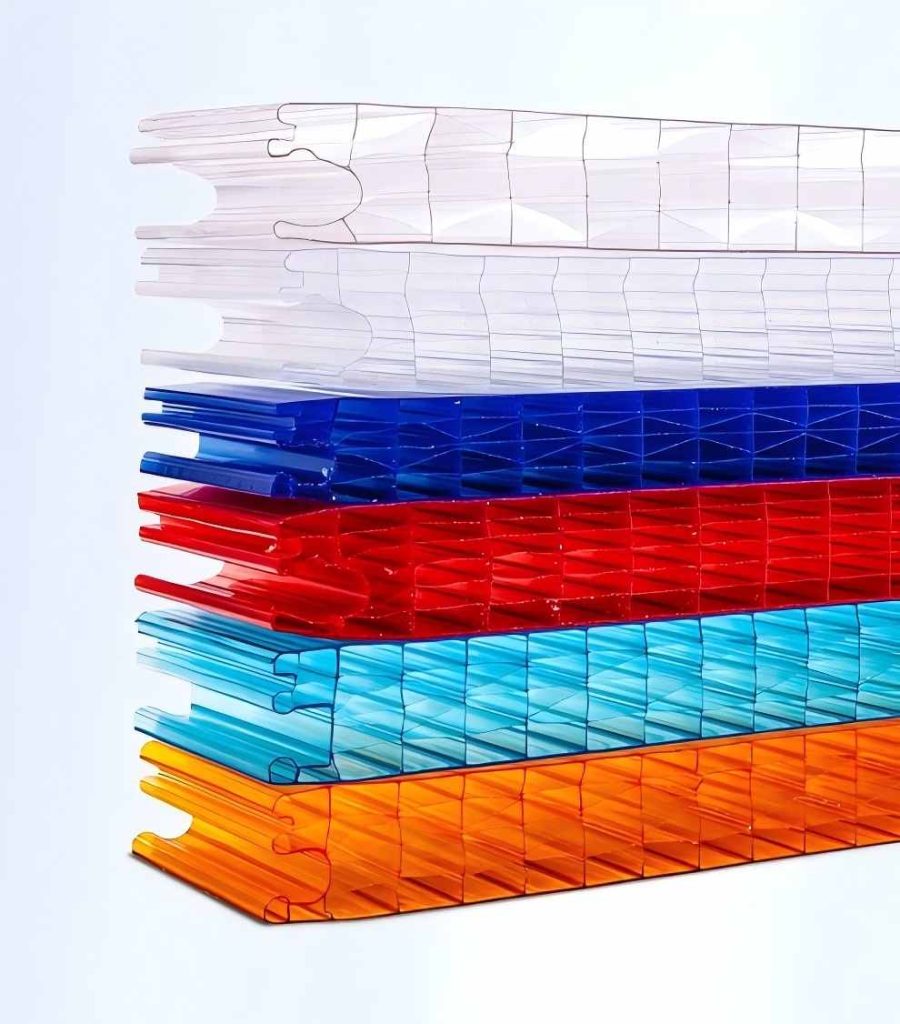
This interlocking polycarbonate sheet (Interlocking PC Sheet) stands out with its unique interlocking design. In terms of performance, it has excellent light transmittance, allowing sufficient light to pass through. Meanwhile, it has strong impact resistance and is not easy to break. It also has good weather resistance, enabling long – term use in different climatic environments, and possesses excellent heat insulation and preservation effects. For advantages, it is easy to install. The interlocking method allows for quick splicing, saving construction time and cost. Moreover, the splicing is tight with good sealing performance, which can effectively prevent wind, water and dust.
It has a wide range of applications. In the construction field, it can be used for the lighting roofs of sunrooms and greenhouses to introduce natural light into the space. In the industrial field, it is suitable for workshop partitions, equipment protection, etc. It can also be used in the production of advertising light boxes, using its light transmittance to present clear and bright advertising pictures.


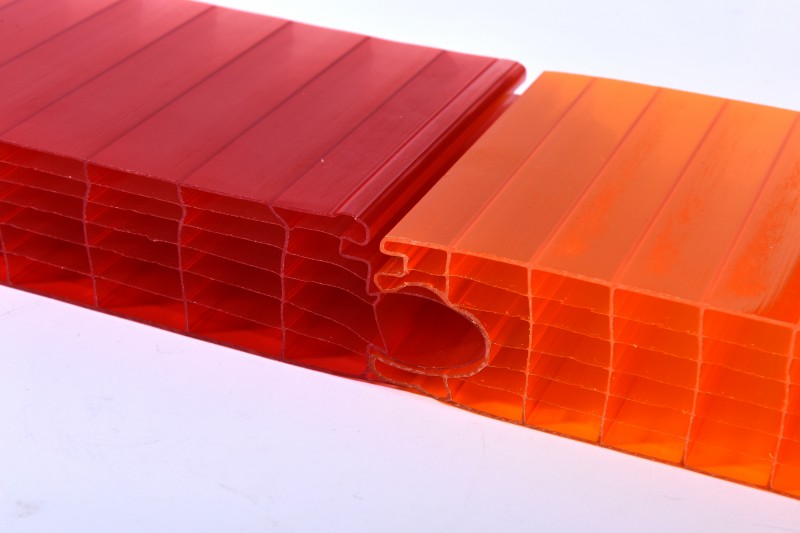
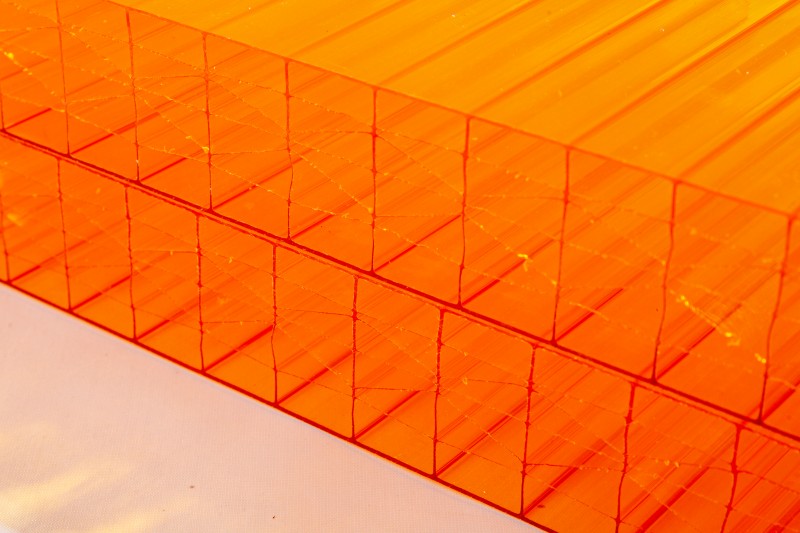


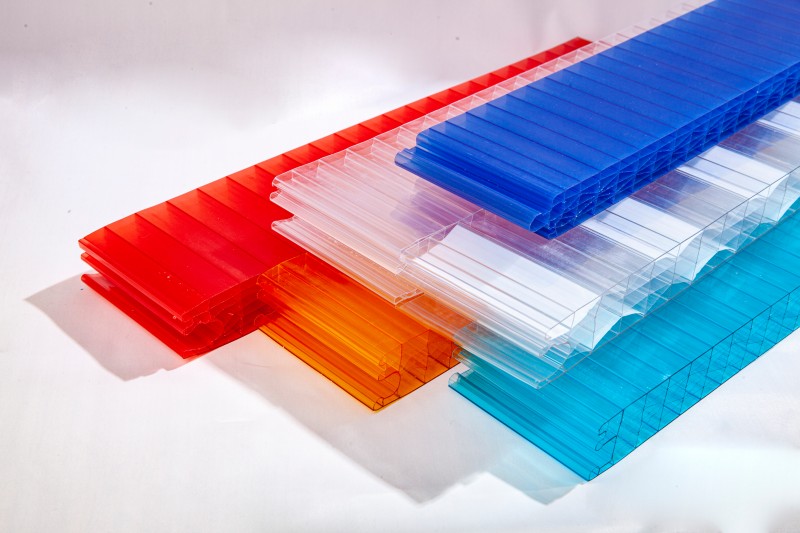
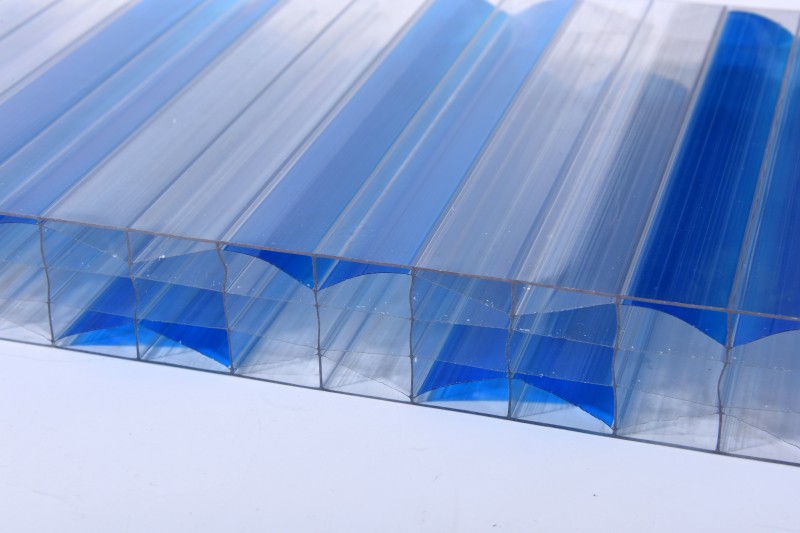
Interlocking PC Sheet
Product Material: Made of selected polycarbonate (PC), which has excellent chemical stability and physical properties.
Thickness Specifications: Multiple thickness 20-50mm are available, which can be flexibly adapted according to the requirements for strength, heat insulation, etc. in different scenarios.
Width Specification: 500mm, 800mm
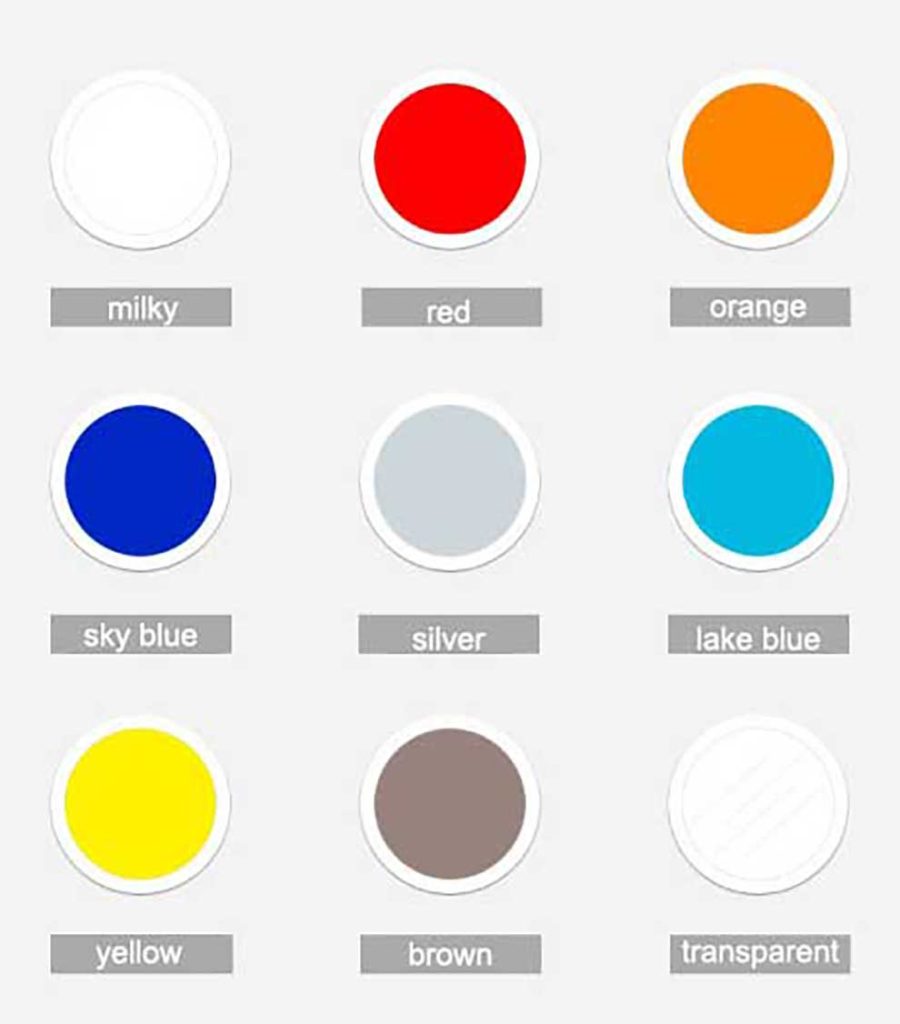
Rich Colors: There are various colors such as transparent, lake blue, orange yellow, red, milky white, and sky blue. It can not only meet the design requirements of different styles but also achieve specific functions through colors (such as lake blue and sky blue can filter strong light to a certain extent).
we promise
- Possesses high strength, with a stable and reliable structure that can bear a certain external load.
- Has high toughness and excellent impact resistance, which is not easy to be damaged when facing collision or impact.
- Exhibits outstanding high-temperature resistance, maintaining stable performance in high-temperature environments without easy deformation.
- Features high transparency and good light transmission effect, which can transmit light clearly and is suitable for scenarios requiring lighting.
- Equipped with an anti-aging UV co-extruded layer, which can effectively block UV radiation, slow down the product aging rate and extend the service life.
PC Raw Materials Lay the Foundation
Quality is Naturally More Reliable
Frequently Asked Questions
Q: When Interlocking PC Sheets bear long-term snow loads (≥50kg/㎡), what bending strength must the sheets reach to avoid permanent deformation? What is the corresponding international standard?
A: The bending strength of the sheet must be ≥60MPa, and the elastic modulus must be ≥2400MPa to maintain structural stability without permanent deformation under this snow load. The corresponding international standard is ISO 178:2019 “Plastics – Determination of Flexural Properties”. During the test, the support span of the sheet should be set to 10 times the thickness of the sheet, and the loading speed should be controlled at 2mm/min to ensure the test data conforms to the actual application scenario.
Q: What UV aging resistance requirements must Interlocking PC Sheets used for subway entrance canopies meet to ensure that the light transmittance attenuation does not exceed 10% within 10 years?
A: PC raw materials added with ≥3.5% UV stabilizers (such as 2-hydroxy-4-methoxybenzophenone) must be used, and the sheet surface must have a special UV-resistant coating with a thickness of ≥6μm. At the same time, it must pass the cycle test in ASTM G154:2021 “Standard Practice for Operating Fluorescent Ultraviolet (UV) Lamp Apparatus for Exposure of Nonmetallic Materials” (each cycle includes 8 hours of UV irradiation + 4 hours of condensation), with a cumulative test time of ≥1000 hours. The light transmittance attenuation after the test must be ≤5%, so that the attenuation in actual use for 10 years can be controlled within 10%.
Q: When connecting Interlocking PC Sheets to concrete walls, how to solve the problem of seal failure caused by the difference in thermal expansion between the two? What are the specific requirements for the selection of connecting accessories?
A: A “flexible transition connection” scheme must be adopted: preset anti-corrosion wood keels or aluminum alloy keels on the concrete wall, leave a 15-20mm expansion joint between the keels and the wall, and fill it with elastic sealant; connect the PC sheet to the keel through sliding nylon buckles, the buckles must be made of weather-resistant nylon 66 material, and the fitting gap between the buckles and the PC sheet interlock must be controlled at 3-5mm to allow the PC sheet to expand and contract freely along the longitudinal direction. At the same time, the sealant must be a neutral silicone sealant with a displacement capacity of ≥25% to ensure long-term sealing effect.
Q: When Interlocking PC Sheets are used in high-temperature and high-humidity environments (temperature ≥40℃, relative humidity ≥90%), the metal connectors at the interlock part are prone to corrosion. What anti-corrosion treatment process should be adopted? What is the required corrosion-resistant life after treatment?
A: Metal connectors (such as bolts, nuts) must adopt a double anti-corrosion treatment of “hot-dip galvanizing + passivation”, the galvanized layer thickness is ≥85μm, and the passivation layer adopts chromate passivation or chromium-free passivation (complying with RoHS standards). The treated connectors must pass the neutral salt spray test in GB/T 10125-2021 “Corrosion Tests in Artificial Atmospheres – Salt Spray Tests” with a test time of ≥1000 hours and no red rust on the surface. On this basis, its corrosion-resistant life in high-temperature and high-humidity environments can reach 8-10 years.
Q: If the Interlocking PC Sheet roofing system needs to meet the requirement of withstanding an earthquake intensity of 8 degrees, in addition to strengthening the support structure, what index must the impact toughness of the sheet itself reach? What is the test method?
A: The impact toughness of the sheet must be ≥15kJ/㎡ (simple beam impact test), and there should be no obvious cracks or fractures after impact. The test method is based on GB/T 1043.1-2008 “Plastics – Determination of Charpy Impact Properties – Part 1: Non-instrumented Impact Test”. Type A notched samples (notch depth is 1/3 of the sheet thickness) are selected, the impact speed is 3.5m/s, and the test is carried out at 23℃±2℃. Each group of tests includes no less than 5 samples, and the average value is taken as the final result.
Q: When Interlocking PC Sheets are used for clean roofs in pharmaceutical workshops, what requirements must their surface chemical resistance meet? Which specific test is required for verification?
A: It must withstand immersion in ethanol with a concentration of ≤50%, sodium hydroxide solution with a concentration of ≤10%, and hydrochloric acid solution with a concentration of ≤5%. After 24 hours, there should be no discoloration, blistering, cracking or swelling on the surface, and the surface resistivity must remain ≥1×10¹²Ω (to avoid electrostatic dust adsorption). Verification requires the immersion test in GB/T 11793-2008 “Plastics Films and Sheeting – Determination of Resistance to Liquids”. The test temperature is controlled at 23℃±2℃. After immersion, it must be rinsed with purified water, dried, and then the surface state and resistivity are tested.
Q: If the Interlocking PC Sheet roofing system needs to meet the requirements of GB 50189-2015 "Design Standard for Energy Efficiency of Public Buildings", what is the maximum allowable heat transfer coefficient (K-value)? How can double-layer hollow sheets reduce the K-value further through structural optimization?
A: In cold regions of China (such as Northeast and North China), the K-value of the roofing system must be ≤0.60 W/(m²·K); in hot-summer and warm-winter regions (such as South China), it must be ≤0.80 W/(m²·K). Double-layer hollow sheets can reduce the K-value through the following optimizations: first, increase the thickness of the hollow cavity from 10mm to 16mm to increase the thermal resistance of the air layer; second, fill the hollow cavity with vacuum insulation strips (width ≥12mm) with an interval of ≤300mm; third, composite an aluminum foil reflective layer with a thickness of ≥0.1mm on the inner side of the sheet to reduce radiant heat transfer. After optimization, the K-value can be reduced from the conventional 2.8 W/(m²·K) to below 1.2 W/(m²·K).
Q: When Interlocking PC Sheets are used outdoors and encounter hail impact (hail diameter ≥30mm, falling speed ≥20m/s), what impact resistance indicators must they meet? What standard must be followed during testing?
A: The sheet must meet the requirements of “no penetration and no structural cracks after impact”, and the indentation depth at the impact point must be ≤2mm, and the indentation can recover ≥80% by itself after 24 hours (reflecting material elasticity). The test must follow ASTM D3420-2016 “Standard Test Method for Impact Resistance of Plastic Film and Sheeting by the Free-Falling Dart Method”, using “Method A” (fixed mass, adjusted height). The dart head mass is set to 500g, the falling height is adjusted to make the impact speed reach 20m/s, and each test sample must undergo 5 impacts at different positions, all of which must meet the above indicators.
Q: When connecting Interlocking PC Sheets to color steel sheet roofs, how to handle the height difference and sealing between the two to prevent rainwater from seeping through the joint? What performance requirements must the waterproof accessories at the joint meet?
A: A “stepped transition + flexible sealing” scheme must be adopted: first, install an aluminum alloy edge trim with suitable height at the edge of the color steel sheet roof (the height of the edge trim is consistent with the thickness of the PC sheet, with an error of ≤1mm), fix the edge trim to the color steel sheet with self-tapping screws (screw spacing ≤300mm), and apply sealant at the screws; fill the gap between the PC sheet interlock and the edge trim with foam rubber strips (cross-sectional size 10mm×15mm, compression rate ≥40%), then cover with aluminum alloy pressing strips, and fix the pressing strips with nylon bolts (to avoid corrosion caused by direct metal contact with the PC sheet). Waterproof accessories must meet: the weather resistance grade of the foam rubber strip is ≥Grade 2 of GB/T 18244-2019, the salt spray resistance of the aluminum alloy edge trim is ≥500 hours (GB/T 10125), and the displacement capacity of the sealant is ≥30%.
Q: How many opening and closing cycles must the interlock fatigue life of Interlocking PC Sheets reach to meet the 15-year service demand? How to simulate the opening and closing stress in actual use during testing?
Get Updates And Stay Connected Subscribe To Our Newsletter
1000+ Corporate Collaboration Case Studies One-stop service from design to delivery, reducing processing time by 30% Click to consult – Customized solution within 4 hours and fast delivery within one week.

